
Home > 2026 Invited Speakers
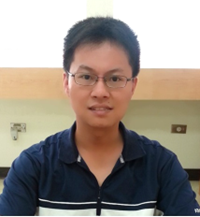
Wei-Song Hung
National Taiwan University of Science and Technology, Taiwan
Biography: Dr. Wei-Song Hung is a professor of Applied Science and Technology at National Taiwan University of Science and Technology (NTUST). He obtained his master's degree from the NTUST Department of Polymer Engineering in 2006 and received his PhD from Chung Yuan University, Department of Chemical Engineering, in 2011. He served as an assistant professor in 2012 and became an associate professor at Chung Yuan University, Department of Chemical Engineering, in 2015. In 2018, he was appointed as a professor at NTUST, Graduate Institute of Applied Science and Technology. His research focuses on using positron annihilation techniques to study the free volume of materials and on fabricating graphene membranes for water production and energy generation. Since 2007, he has published more than 250 SCI papers, with over 12,000 citations, an h-index of 57, 15 patents, and multiple prestigious awards, including the Gold Award for three consecutive years (2016–2018) at the United States Pittsburgh International Invention Exhibition, the Gold Award at the 2017 Swiss Geneva Invention Exhibition, the Gold Award at the 2019 Germany Nuremberg International Invention Exhibition, and the R&D Top 100 Award in 2022 (USA). Additionally, he was recognized as one of the World's Top 2% Scientists for four consecutive years (2021–2024) and won the 2025 Net Zero Tech Intl. Contest Championship.
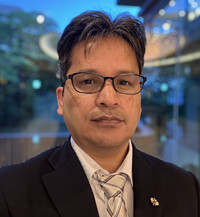
Bashir Ahmmad Arima
Yamagata University, Japan
Biography: Dr. Bashir Ahmmad ARIMA has completed his PhD at Kagoshima University, Japan. Currently, he is an associate professor at the Graduate School of Science and Engineering, Yamagata University, Japan. Prior to joining the current institution, he had been working as an assistant professor and a researcher at Okayama University and Kyushu University, respectively. He is a recipient of a Japanese government (MEXT) scholarship and a JSPS postdoctoral fellowship in Japan. His research interests include solar energy (solar hydrogen, solar cells), nanomaterials, photocatalysis, and magnetic materials. He has published more than 95 scientific journal papers, one patent and two book chapters. He had been an editorial board member of “Energy” and a guest editor of the “International Journal of Photoenergy”. He is currently serving as an advisory board member of “MIST International Journal of Science and Technology”, an editorial board member of “American Research Journal of Electrical Engineering”, and a technical committee member of “Component Parts and Materials” of the IEICE society in Japan.
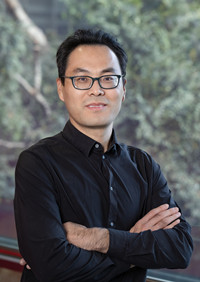
Qingfeng Zhai
University of New South Wales, Australia
Biography: Dr Qingfeng Zhai is currently a Lecturer and ARC DECRA Fellow at the Australia Carbon Materials Centre (A-CMC), School of Chemical Engineering, University of New South Wales (UNSW Sydney). Dr Zhai received his PhD degree from Changchun Institute of Applied Chemistry (CIAC), Chinese Academy of Sciences (Changchun, China) in 2018, with his research focusing on the fabrication of various high-efficiency electrochemical sensors. From 2018 to 2020, Dr Zhai worked as a Postdoctoral Research Associate at Monash University, developing highly flexible energy storage and sensing devices for wearable applications. After that, Dr Zhai moved to UNSW Sydney, working under the supervision of Prof. Liming Dai as a senior Postdoctoral Research fellow. Currently, his research focuses on carbon-based materials for electrocatalysis and sensing applications. This includes using the advanced in-situ characterization technique, such as electrochemical scanning tunneling microscope (EC-STM), for the catalytic mechanism study from the atomic scale, as well as screening or developing highly efficient carbon catalysts for diverse applications, including energy conversion and green chemistry.